


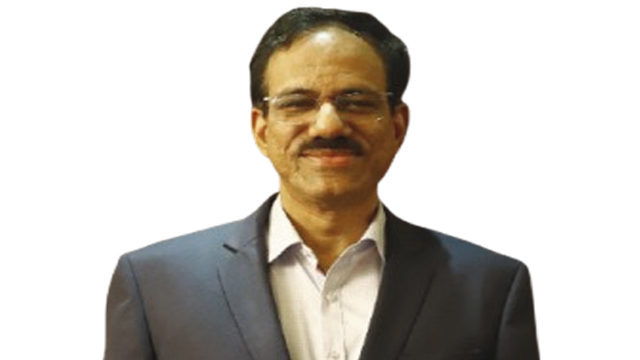
Intro: Ask India’s technology missions one question: if the money stopped tomorrow, what would still stand? Dr Sriram Birudavolu has been putting that question to everything from chip fabs to drone fleets and the answers are uncomfortable. In this interview with senior journalist Mahima Sharma, the former CEO of DSCI’s Cybersecurity Centre of Excellence argues that India’s next challenge is not announcing more missions but building ones that outlive their subsidies. Let’s read his prescriptions from an exclusive interaction with Indiastat on Socio-economic Voices. this week….
MS: Semicon 2.0 now carries an outlay of Rs. 1,27,500 crore, while the government says investment commitments of around Rs. 1 lakh crore have already come in. What should India demand in return for this public support, so that we build a deep semiconductor ecosystem rather than mainly assembly capacity?
Dr Sriram: I would first look at the depth of the ecosystem being built, rather than just the list of plant announcements. It is easy to set up a packaging line, but a fabrication plant surrounded by local suppliers of gases, chemicals, equipment servicing and design houses is a totally different ballgame and such projects are exactly the sort of things that should be funded by public money.
Sovereign technologies should be built with the money.
This proposal ties the funding to capital expenditure, with 40% allocated to CMOS fabs and 35% to all other fabs and advanced packaging, thus allowing for more conditions to be added to it. The payments should be made in installments depending on progress, such as local procurement of materials and equipment servicing, R&D spending and the number of patents in India, as well as hiring and training programmes that provide specific numbers. Each company that benefits from this programme should provide access to a certain percentage of its capacity or pilot line to Indian start-ups and universities at an affordable price, giving design talent a chance to test silicon here.
Clawback provisions and public reporting should be included in the programme. If the commitments to the ecosystem are not fulfilled, then some of the support should be returned. The funding should be bundled within a certain geographic area so that suppliers have an incentive to set up shop there.
The test is quite simple: In ten years, if one of those fabs left tomorrow, would the ecosystem still exist? If yes, then the money was well spent.
MS: India is simultaneously trying to build semiconductor capacity, AI compute and data-centre infrastructure. How should policymakers decide where public incentives are actually needed? At What stage should private capital take over, particularly when power, land, water and skilled manpower are all becoming competing costs?
Dr Sriram: Start by asking one simple question: would this investment happen without the existence of the incentive? If the answer is yes, then the funding being offered is not necessary.
Fabs and compound semiconductors need support because the amount of money involved is huge, the payback period is long and the learning curve is steep. When it comes to computing and data centres, commercial viability has already been attained, which means that the role of the public sector here is enabling rather than subsidising. This means there should be provision for electricity, land-related regulations and a single-window clearance procedure. Research infrastructure and test beds also deserve public funding since no private company would fund something that everyone else can use.
Private money should come in when three criteria have been met: there is proof of demand, the utilisation rate will cover the cost and there are repeat customers. A sunset clause should always be included in every incentive so that the amount of support offered gradually declines as these signs appear, rather than continuing indefinitely.
As far as the various costs are concerned, we should stop seeing electricity, water and land as free factors of production and start charging proper prices. Large campuses should start using recycled water and purchasing their electricity from renewable sources. There should be regional planning of groups of facilities so that no particular city ends up providing all the services simultaneously.
In terms of skills, each beneficiary should co-finance training along with the surrounding institutions. Manpower will therefore grow according to demand rather than being drawn from the same pool.
MS: An ICMR study released in August 2026 found that drone-based TB sample transport cut diagnostic turnaround time from 15 days to 5 days and patient expenditure from about Rs. 9,451 to Rs. 91. What is stopping India from taking proven drone use-cases like this from isolated pilots to routine district-level public services and what should the financing and procurement model look like?
Dr Sriram: Results from Yadadri-Bhuvanagiri demonstrate some progress, but developing and implementing drone services at scale requires champions pushing at multiple levels. Routine services require earmarked budgets, clear processes and rules and multi-year contracts, all of which are generally absent.
The study identifies the key challenges to UAS as low awareness, social stigma, challenging weather conditions, payload limits, difficult terrain, training and regulatory gaps and delays. Furthermore, the drop from Rs. 9,451 to Rs. 91 reflects patients’ out-of-pocket expenses, not the total expenses in the system.
To begin, we need to accurately cost the service.
Next, change the procurement process: instead of purchasing drones, the state needs to procure services. Cluster-based, multi-year contracts need to be issued, with pricing based on the turnaround times for sample deliveries. The contract should outline penalties for missing targets and bonuses for samples delivered ahead of schedule. The state bears the risk of failed targets, while the service provider bears the risk associated with the equipment.
For the initial years of operation, provide viability-gap funding, followed by routine funding from health budgets. Increase the utilisation of drone networks by transporting blood units, medicines and vaccines through the same network and build workflows for the National TB Elimination Programme. Enforce strict privacy protocols. Disclose unit costs to help subsequent districts.
MS: The government’s August 2026 clarification on UPI keeps consumer payments free while leaving room for a nominal MDR on a limited category of merchant transactions. What pricing model can keep UPI financially sustainable for banks and technology providers without pushing small merchants back towards cash or making digital payments expensive?
Dr Sriram: I would keep the principle simple. Ordinary people and small shops should never have to pay anything. Large merchants who profit from digital payments should help cover the cost of the infrastructure. The August clarification points in this direction. Person-to-person payments must stay free. Any merchant discount rate (MDR) should apply to a limited group of merchants above a certain threshold and at a very low rate—much lower than what cards currently charge.
Here’s how I would structure it. Keep the charge at zero for smaller merchants. The cutoff should be based on turnover, not the size of individual transactions. Above that threshold, apply a percentage MDR with a cap in rupees per transaction. This way, large payments aren’t disproportionately charged and the fee matches the actual cost. Add a fee layer for premium services like credit on UPI or instant settlement. That way, merchants who want extra features pay for them, not for the base service.
Also, protect the revenue. A portion of the income should go towards incentives for banks and service providers who bring in and support merchants. Review the thresholds annually using data on merchant retention. If many small shops drop out, the model isn’t working.
One warning: test changes in a few categories first. Watch closely for a shift to cash. If a monthly cost starts to eat into a shop’s margin, the owners will quietly stop using digital payments and go back to cash. That’s the sign the model is failing.
MS: The Financial Fraud Risk Indicator is reported to have helped prevent suspected cyber-fraud transactions worth Rs. 5,043.73 crore by August 2026, with more than 1,600 organisations connected to the Digital Intelligence Platform. What is the next practical step in bringing more NBFCs, fintechs and payment firms into the system - improving real-time data sharing or creating clearer rules on who bears the loss when a flagged transaction is still allowed?
Dr Sriram: Real-time data sharing is the most important factor for the FRI. How quickly the framework responds to losses becomes critical after that. The FRI grades risk as medium, high or very high when a payment starts and, by August, had stopped suspected fraud worth Rs. 5,043.73 crore, with over 1,600 organisations on the FRI. This works best as a signal. Therefore, improvement and quality should take precedence over speed, with a focus on APIs and reducing latency to seconds. For the FRI to gain trust, a feedback loop is important.
There should be a graduated liability framework. The larger share of the loss should be borne by the institution that releases a flagged transaction. If an institution acts on a flag that later turns out to be incorrect, it should be protected from complaints and penalties. If nothing is done to prevent fraud despite a warning, then a smaller share of the loss should be borne by the institution.
For NBFCs and fintechs, ease the onboarding requirements by providing a common technological platform and sandbox. Integration costs should not be a reason for them not to join.
MS: MeitY and state agencies have been running DPDP workshops across government departments, with the next phase of the framework approaching in November. What should the government do now to help MSMEs and smaller digital businesses meet privacy requirements without turning compliance into a barrier to digitisation?
Dr Sriram: Compliance should be more like filling in a form than having to consult a lawyer. A company with five employees and a list of clients poses a different level of risk than a system with millions of files and the regulations need to be clear enough to reflect that.
Timing helps here. The rules came out in November 2025. Provisions on consent managers come into effect after twelve months, with primary duties and sanctions following after eighteen months, around May 2027. Thus, the coming months serve as a period for guidance rather than active enforcement.
Apply the rules effectively. Categorise requirements based on the amount of data held and its sensitivity, giving smaller companies just a brief list to follow. Make ready-to-use resources available: sample notices for obtaining consent written in local languages, a simple form for listing the data held, a template for notifying people about data breaches and a clear manual explaining the requirements. Reach micro and small businesses through channels they already trust, such as industry groups, professional bodies and shared help centres and organise short, hands-on sessions instead of lengthy talks.
Promote DPI (Data privacy impact assessment), PBOM (Privacy Bill of Materials), and Privacy Engineering / PETS (Privacy Enabled Technologies and Services).
Once implementation begins, prioritise corrective action over punishment unless severe or recurring harm occurs. A testing ground for evaluating procedures could help, along with a support line that responds within one or two days.
Most small companies do not disregard rules out of stubbornness. They overlook them because they cannot determine what is required. Eliminate that uncertainty and compliance usually follows.
MS: From October 1, 2026 biometric Aadhaar authentication is required for subsidised domestic LPG refills, with nearly 89.9% of active consumers already authenticated by September 19. How should policymakers measure the economic gain from reducing duplicate or ineligible subsidy claims against the costs of failed authentication, exclusion risks, grievance handling and protection of citizens’ personal data?
Dr Sriram: I would approach it as a net-benefit equation and be honest about both sides. By 19 September, 89.9% of the 27.43 crore active domestic consumers had already been authenticated, so the remaining costs relate to those still requiring authentication.
The gains should include only verified savings, such as subsidies that would otherwise have been duplicated or provided to ineligible connections but have now been stopped and confirmed through an audit. A deactivated connection does not necessarily represent a saving, as some belonged to genuine households.
There are four types of costs.
Failed authentication: time lost, travel for access and repeat visits, particularly for older people, manual workers with poor fingerprint recognition and users with poor connectivity.
Wrongful exclusion: eligible households paying the full price, the value of missed subsidies and any resulting hardship.
Grievance resolution: staff costs, resolution times and appeals.
Data security: careful storage audits and the estimated impact of a data breach.
Track a few key metrics: false rejection rates by group and district, time taken to resolve authentication failures, the percentage of users who complete authentication through each route (delivery app, distributor showroom and self e-KYC) and the share of households switching to unsubsidised cylinders.
If savings per rupee exceed the full cost and exclusion remains below a published threshold, then there is a case for the process. If not, the process must be improved first. After a year, an independent evaluation can settle the argument.
MS: By August 2026, IndiaAI had expanded shared compute capacity to more than 45,000 GPUs, while 237 projects had accessed subsidised computing and 20 indigenous foundation-model proposals had been selected. What should decide continued access to subsidised compute (research value, jobs, export potential, public-sector use, commercial revenue, or some measurable combination)? And why?
Dr Sriram: I would opt for a measurable blend because no single measure would be appropriate for such diverse users. It would not be appropriate to measure a research laboratory and a company shipping a product using the same yardstick.
Create a scorecard in which the weightings differ by project type. Academic projects: papers, released open models and datasets and reproducible benchmarks. Applied and commercial projects: deployment in actual workflows and users’ income and employment. Public-sector adoption: state agencies using the product and the actual time or money saved.
This should be followed by two rules.
Why use a combination? Any single measure can be manipulated and any single measure misses important aspects. Relying only on revenue would neglect research that may yield results in ten years. Focusing only on research output could support well-written papers that never benefit users. The 20 foundation-model teams should be evaluated based on actual usage and benchmarks rather than announcements.
Conduct quarterly reviews, publish the findings and have a small, independent panel make the decisions.
MS: BHASHINI is now being taken deeper into government work, including AI-based translation with the CAG and multilingual governance initiatives with NITI Aayog. What would it take to move Indian-language AI from demonstrations to measurable productivity gains in government offices, courts, education and business? What would ensure better datasets, procurement reform, outcome-based contracts for wider access to local-language computing?
Dr Sriram: We love demos, but the real value comes from productivity gains. Start measuring these by identifying a couple of processes to monitor and evaluate. For example, you could measure the time taken and error rates for translating audit reports and judgments, responding to citizen queries, or transforming school materials. These should be measured both before and after using the tool.
The first major bottleneck is the availability of datasets. BhashaDaan demonstrates that text, audio and video can be crowdsourced. However, the most valuable data comes from actual work. This includes notes, classroom recordings and other records, all collected with the subjects’ permission, anonymised and glossed for legal and technical terms. Speech data needs to be collected across different dialects. For data-related tasks, people should be paid for their work, especially for data annotation. Human oversight should remain part of the process.
For procurement, pay for results, not licences. Keep contracts short enough to allow poor performers to be replaced. The tool will need to be customised to integrate with the systems people already use, rather than requiring them to switch to a new, centralised portal.
For computing, provide shared inference credits. You should also establish open benchmarks. To enable fair comparisons of quality, maintain benchmarks for best-in-class speech datasets.
MS: The National Quantum Mission now has four thematic hubs, 86 participating institutions and new research infrastructure being established at institutions including IISc, IIT Bombay, IIT Kanpur and IIT Delhi. How can India prevent quantum research from remaining scattered across laboratories and instead create common testbeds, industry partnerships and commercial milestones that lead to usable products?
Dr Sriram: The effort will be more or less evenly distributed at this stage, so the best solution is likely to be driving the labs towards shared infrastructure and goals.
To start, we can create shared testbeds. Examples include open-access facilities for manufacturing, cryogenics, control electronics and quantum networking, offered to any hub, start-up or company on published terms. Don’t reinvent the wheel.
Next, establish shared benchmarks. The Mission has set a few benchmarks as well, such as achieving 50–100 physical qubits in five years and 50–1,000 in eight years, as well as developing long-distance secure connections and sensors.
Each hub should be evaluated against the same set of technical milestones for qubit quality, coherence and error rates on a fixed schedule and funding should be linked to this assessment.
Third, be sure to incorporate users into the process. Telecom, finance, pharma and materials can help define the challenges that hubs can address. Real-time sensing and quantum-safe communications and computing are more meaningful and achievable in the near term than a universal computer.
Fourth, implement straightforward IP rules to encourage the transfer of technology out of the lab.
Lastly, create a very small body to coordinate cross-lab software tools, standards and calibration, allowing work from one lab to be transferred seamlessly to the next.
MS: The government is now actively bringing private companies, investors and strategic users into the National Quantum Mission through industry–venture partnership initiatives. Given that many quantum applications are still commercially immature. How should India divide financial risk between the state, private investors and early customers? How can promising firms survive the long gap between research and revenue?
Dr Sriram: The first part is the risk portion. The state should bear the earliest, riskiest phase: fundamental research, shared infrastructure and talent development. That's roughly what a mission of around Rs. 6,000 crore over eight years is meant for. Private investors might come in once a technology proves itself in the lab and the focus shifts to engineering and scale. They should commit their money in batches as each technical milestone is achieved, rather than in a single cheque. Early customers shoulder the least risk, but they make all the difference. Advance purchase obligations or paid pilots, even small ones, communicate to investors that there is demand for the product.
Part two is surviving the hiatus. Generate revenue before the big hardware is ready through consulting, software simulators, sensors, components and quantum-safe security. Add grants (with no equity stake), public procurement of pilots, venture debt with a partial guarantee and patient capital with a 10–12-year horizon.
Shared laboratories also reduce capital requirements. A start-up that rents time on a cryostat pays far less than one that purchases its own.
Set candid milestones. Continue supporting teams that achieve them and stop supporting those that don't, so the runway is long but not eternal.
Reference taken from:
About Dr Sriram Birudavolu
A senior technology expert with global leadership experience across IT, telecom, cybersecurity and AI. He holds a PhD in Open Innovation in ICT from the Indian Institute of Foreign Trade (2016), a Master’s in Computer Science and a Bachelor’s in Electrical Engineering. He is the author of Business Innovation and ICT Strategies (Palgrave Macmillan, Springer, 2018).
He is the former CEO of DSCI’s Cybersecurity Centre of Excellence, which has incubated 86 cybersecurity and privacy startups. Earlier, he headed Information Sciences at T-Hub, accelerating 160 startups. His career includes leadership roles at Oracle, VeriSign, Siemens, Hewlett-Packard and TechSpan. He is a TOGAF 9 certified architect, a PMP and holds DSCI’s DCPLA and DCDPO certifications.
About the Interviewer
Mahima Sharma is an Independent Senior Journalist based in Delhi NCR with a career spanning TV, Print, and Online Journalism since 2005. She has played key roles at several media houses including roles at CNN-News18, ANI, Voice of India, and Hindustan Times.
Founder & Editor of The Think Pot, she is also a recipient of the REX Karmaveer Chakra (Gold & Silver) by iCONGO in association with the United Nations. Since March 2022, she has served as an Entrepreneurship Education Mentor at Women Will, a Google-backed program in collaboration with SHEROES. Mahima can be reached at media@indiastat.com
Disclaimer : The facts & statistics, the work profile details of the protagonist and the opinions appearing in the answers do not reflect the views of Indiastat or the Journalist. Indiastat or the Journalist do not hold any responsibility or liability for the same.
"UPI Must be Free for Small Shops; Cap the Fee for Big Merchants"... Read more


